
Dark Sky on Rømø – starry skies, the Milky Way and northern lights over Vadehavet
Rømø ligger på en af Danmarks mørkeste strækninger. Her er din guide til de bedste steder, tidspunkter og gode råd til at opleve stjernehimlen, Mælkevejen og nordlyset over klitterne.
Experience one of Denmark's darkest night skies on Rømø, where you can see stars, the Milky Way, and northern lights in stunning, undisturbed surroundings by the Wadden Sea.
Sted
Rømø and the surrounding Wadden Sea landscape
Ideal conditions
Clear night, preferably during the autumn or winter months
Best spots
Lakolk Strand, Sønderstrand, and heath lakes by the island's plantations
Special focus
Dark sky, stargazing, the Milky Way, and the chance of northern lights
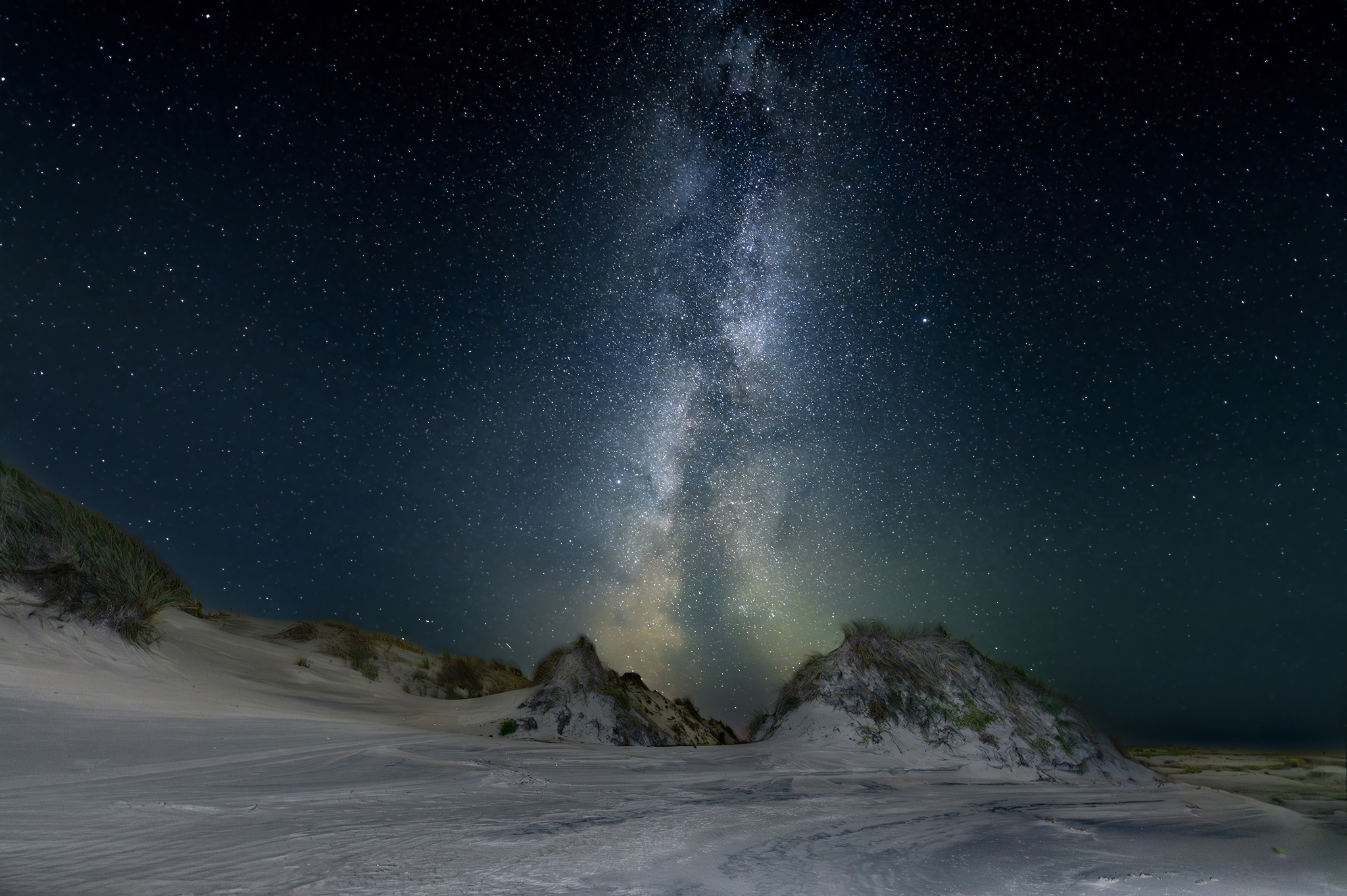
Når den sidste solstribe forsvinder bag Nordsøen, og vinden lægger sig i klitterne, sker der noget på Rømø. Himlen bliver dyb, næsten sort – og så kommer de. Først et par enkelte stjerner, så hundreder, og til sidst tusinder. På en klar nat trækker Mælkevejen sig som et lysende bånd hen over klitterne, og hvis du er heldig, danser nordlyset i grønt og violet over horisonten.
Rømø ligger på en af de mørkeste strækninger i hele Danmark. Her er ingen storbyer, ingen motorveje og ingen industri – kun marsk, hede, plantager og en af Nordeuropas bredeste strande. Det gør øen til et fantastisk sted at opleve det, man på engelsk kalder dark sky: en nattehimmel næsten uden lysforurening.
What does "Dark Sky" mean?
Dark Sky is about the natural night darkness – and protecting it. The international organization DarkSky International certificerer steder i hele verden, hvor mørket er så ægte, at man kan se stjernehimlen, som vores forfædre så den. I Danmark er der kun en håndfuld officielle Dark Sky-steder, bl.a. Møn og Nyord, Bulbjerg i Thy, Anholt – og Mandø, Rømø's small neighbor island in the Wadden Sea.
Mandø was certified as Dark Sky Park i marts 2024 – som den første i Nationalpark Vadehavet. Øens 25 gadelamper blev skiftet ud og slukkes nu helt mellem kl. 23 og 05. Rømø er ikke selv certificeret, men deler det samme store, mørke Vadehavslandskab. Står du på Rømøs strand en klar vinternat, er mørket mod vest – ud over havet – næsten fuldstændigt.
Darkness is not the absence of something. It is an experience in itself – the silence, the cold air, and the feeling of being very small under a very vast sky.
Why is Rømø so great for stargazing?
- Unobstructed horizon to the west. To the west, there is only the North Sea – no towns, no light. This provides one of the country's most undisturbed views of the night sky.
- Vast, open plains. The beach at Lakolk and Sønderstrand is several hundred meters wide. No trees or buildings break up the sky.
- Few and small towns. The island's towns – Havneby, Lakolk, Kongsmark, and Juvre – are small, and light disappears quickly as you head into nature.
- In the middle of Vadehavet. The marshes, Mandø, and Vadehavet surrounding the island represent some of the darkest and most pristine nocturnal landscapes in Northern Europe.
The best places for stargazing on Rømø
Lakolk Strand – sky from horizon to horizon
Drive (or walk) out onto the wide beach at Lakolk, og gå et stykke væk fra lyset ved campingpladsen og butikkerne. Mod vest har du havet, mod nord den lange, øde kyst op mod Juvre. Her ser du både solnedgang, Mælkevejen og – når det lykkes – nordlys over havet.
The dunes – shelter and calm
Mellem stranden og plantagerne ligger et bælte af hvide klitter. En lav klit giver læ for vinden, og sandet reflekterer det svage stjernelys, så landskabet næsten lyser. Hold dig til stierne – klitterne er sårbare, og marehalmen holder dem på plads.
Heath and lakes by the plantations
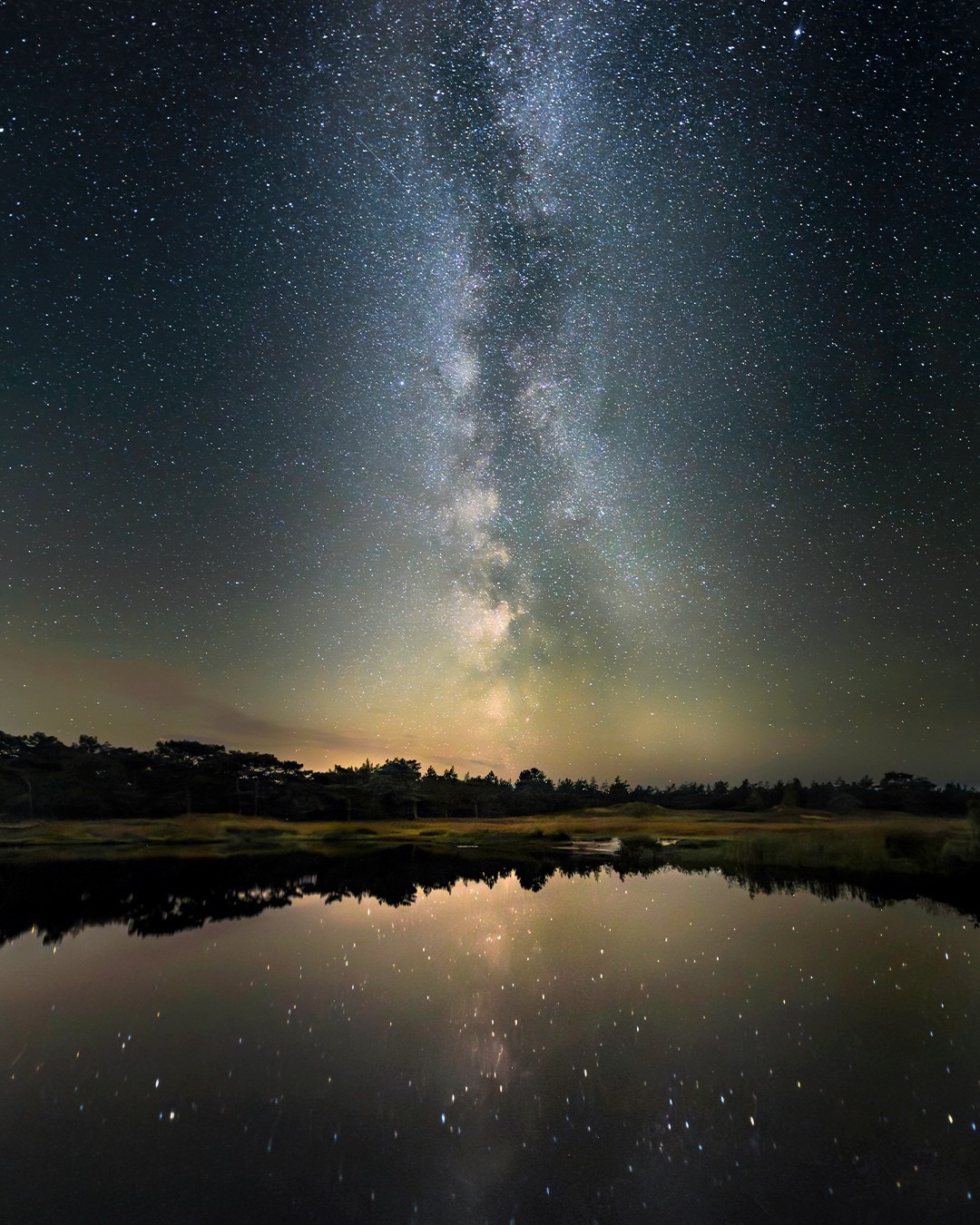
Inland on the island, near Tvismark Plantage og Kirkeby Plantage, ligger små hedesøer. En vindstille nat bliver vandfladen til et spejl, og du kan se stjernerne to gange – på himlen og i søen.
Sønderstrand – the island's southern tip
Sønderstrand er endnu mere øde end Lakolk. Bemærk, at dele af området mod sydvest er militært øvelsesområde – tjek altid practical information for closures before you head out.
Northern Lights over Rømø
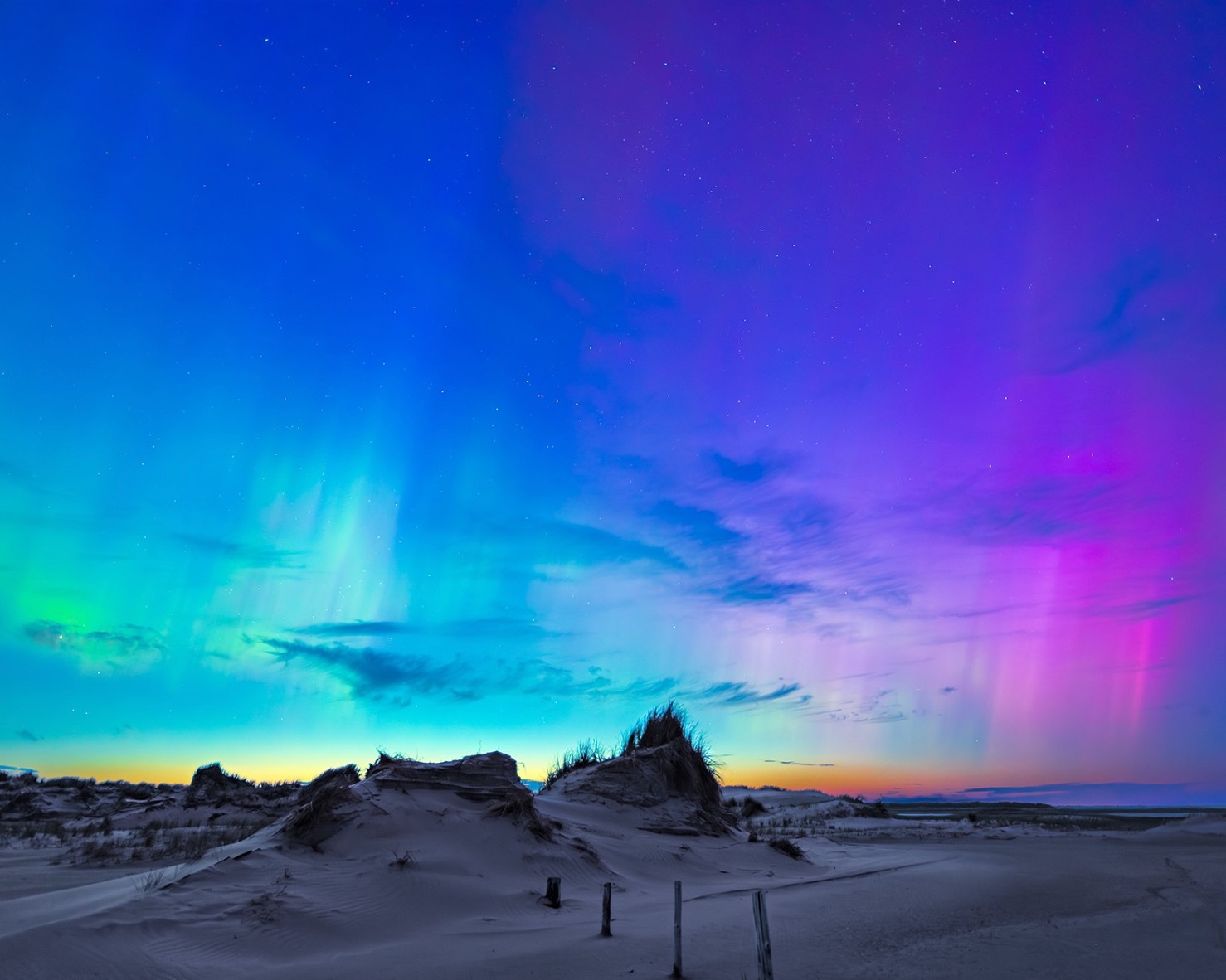
Nordlys forbindes med Norge og Island, men i disse år er chancen for at se det i Sønderjylland større end længe. Solen er omkring sit aktivitetsmaksimum (2024–2026), og ved kraftige solstorme – som i maj og oktober 2024 – har nordlyset kunnet ses over hele Danmark, også Rømø.
Kameraet ser mere end øjet: Et svagt, gråligt skær mod nord kan på et foto vise sig at være kraftige grønne og violette søjler. Tag derfor altid et billede med din mobil på nattilstand, hvis du tror, du ser noget.
How to increase your chances of seeing the Northern Lights
- Keep an eye on a aurora forecast (Kp index). In Southern Jutland, the Kp usually needs to be 5 or higher.
- Find a place with an unobstructed view to the north – e.g., the northern part of the beach at Lakolk.
- The Northern Lights often come in waves. Wait 30–60 minutes, even if the sky looks calm.
When is the best time?
| Periode | What you can experience |
|---|---|
| August – September | The bright core of the Milky Way stands high in the evening sky. Warm nights and shooting stars (the Perseids peak around August 12). |
| October – February | The longest and darkest nights. Orion and the clear winter constellations. Best chance for the Northern Lights. |
| March – April | Still dark evenings and good nights for northern lights around the spring equinox. |
| May – July | Bright summer nights – the sky never gets truly dark. Save the stargazing for autumn. |
Choose a night with no moon or a new moon, and check the weather forecast for cloud cover. The best time is typically 1–2 hours after sunset until midnight.
Tips for your stargazing trip
- Give your eyes time. It takes 15–20 minutes to achieve full night vision. Avoid your mobile screen – or turn down the brightness.
- Use red light. A headlamp with red light won't ruin your night vision (or that of your fellow stargazers).
- Dress warmly. It gets cold standing still at the coast at night – even in September. Bring a blanket, a sleeping mat, and a thermos with coffee or cocoa.
- Watch out for the tide. Out on the beach and the mudflats, the water can rise quickly. Check the tide tablebefore heading out.
- Drive carefully on the beach. Stick to the firm driving tracks, and do not drive into soft sand or close to the water's edge in the dark.
- Be considerate. Turn off your car lights when parked, and let nature – and the animals – enjoy the darkness in peace.
Photograph the starry sky
The photos in this article are taken by photographer Ralf Meyer på Rømø. Vil du selv prøve, er her en god start:
- Use a tripod – or lean your phone against something stable.
- Wide-angle, widest aperture (f/1.8–2.8), ISO 1600–3200, and 10–20 seconds exposure time.
- Focus manually to infinity – or on a bright star in live view.
- Include something in the foreground: a dune, a lake, or an old fence adds depth to the photo.
Guided experiences in the dark
Would you rather have a guide with you? In the autumn, Dark Sky tours are organized in the area – e.g. Dark Sky • Mørke timer ved Højer, hvor du oplever solnedgangen på diget og derefter går ud i mørket med en naturvejleder. Se flere arrangementer i event calendar.
And definitely take a trip to Dark Sky Park Mandø – by tractor bus across Låningsvejen or by tour boat Mandøpigen. Fra Rømø kan du se Mandø ligge som en mørk stribe i Vadehavet mod nord.
Stay the night
The best starry sky requires you to stay after the day-trippers have gone home. Find a holiday home, an inn, or a campsite på Rømø – og gå en tur ud i mørket, når alle andre er gået i seng.
All photos: Ralf Meyer.
Ofte stillede spørgsmål
No. Rømø is not certified by DarkSky International, but the island is located on one of the darkest stretches in Denmark. The neighboring island Mandø was certified as a Dark Sky Park in March 2024.
Visit Rømø & Tønder


